RSS Feed

Tag Archives: Orange County

Ecofessions: Episode I – To Color or not to Color

I am starting a new feature on my blog that I’m calling ecofessions (a word, which I may have invented, or maybe I heard it somewhere else, anyway that’s not the point)…

Ecofessions is where I “fess up” to the things that I do that are not so green.

I just think sometimes, life is hard enough, that sweating over every little thing – is it good for me, is it going to cause cancer, is it bad for the environment – is all just too much sometimes. And then things happen like Hurricane Sandy, and you see that life is really about the big stuff, not all the little things we worry about most of the time.

Believe me, I’m the biggest offender. Shopping with me is no picnic (just ask my hubby). One trip through the store with me (is it organic? is that coffee fair trade? do those eggs say free range?) and he’s just about done. “I’m so glad you do this during the week when I’m at work.” I think was his most recent comment.

But, those are the pressures I put on myself. I’m not here to load guilt on to you. So, just thought I’d start sharing some of my sins to all things green and eco-friendly.

I’m still new to this whole vlogging thing, so excuse my imperfect editing. I’m working on it. 🙂

Here is Episode I of Ecofessions:

Happy Friday everyone. Go enjoy some Halloween candy and a great glass of wine. Life is short. Count your blessings and enjoy!

Allie’s List: Wahoo’s Fish Tacos

Those of you who know me probably know I’m a big Wahoo’s fan. I am there atleast once a week with the E-man (my son) when he has minimum day. It’s our “weekly date” now that he and his sister are going to different schools for the first time since Kindergarten.

The reasons to love Wahoo’s are many – quality, healthy food, fresh ingredients, fast service –  all at a reasonable price. We can feed our family of four for around $20.00! Or $25.00 if my husband and I splurge on a beer-of-the-month (just $1.95 each).

But upon closer inspection, Wahoo’s does pretty well when measured against some green, eco-friendly criteria. I wouldn’t rate is at a ten, but it’s not an offender either.

The food is fresh, with healthy, quality ingredients. My favorite thing is the fresh salsa – a blend of fresh tomatoes, cilantro, onions and peppers. I always order extra, and they happily bring it to my table.

The fish they serve is mainly wahoo. A cousin of mackerel, wahoo is found in warm oceans around the world. In the Pacific, they’re harvested as non-target catch in troll and long-line fisheries – meaning they are caught as fisherman target tunas and other fish. Most of the wahoo in the U.S. market comes from Hawaii, where the fish is nicknamed “Ono,” the Hawaiian word for “delicious.”

No regulations currently apply to wahoo specifically and they are not found on Monterey Bay Aquarium’s Sustainable Seafood Guide. So we can only go with what we know – wahoo fish grow quickly and their biology makes them resilient to fishing pressure. Catch trends have so far indicated that this is true, and regulations are not yet necessary. However, because they are caught on longline, they are subject to several regulations put in place to reduce the impact of troll and longline fisheries in general, as to their impact on other species.

For these reasons – current lack of wahoo research and possible sea turtle bycatch (as a result of longline fishing) – The Monterey Bay  Aquarium Seafood Watch (the expert voice on this subject in my opinion) considers wahoo a “Good Alternative” rather than a “Best Choice.”

Okay, good but not best. I can live with that.

For non-meat eaters, or those (like me) reducing their meat consumption, Wahoo’s also has a number of vegetarian options of the menu. My favorite is the mini Wafu bowl, a mixture of sauteed polynesian tofu, mixed bonzai veggies and a choice of white or brown rice – I always go with brown. I throw my extra salsa on the top, and it’s a good, healthy meal for under $6.

I am also very pleased that all the serving pieces in their restaurants, from cups to plates to utensils are reusable – not something you generally find in a “fast-food” environment.

And they have great community promotions – like the one they are running right now. From November 1-4th, you can trade in your Halloween candy for a free kid’s meal. Just load a bag up with candy, bring it in along with a printed card for the promotion, and get a free kid’s meal. Don’t have a card? No problem, just go to this link on Wahoo’s blog, and print one out.

We went today. My son said goodbye to some of his candy – he wouldn’t part with all so I let him keep some of it – and hello to a free kid’s meal.
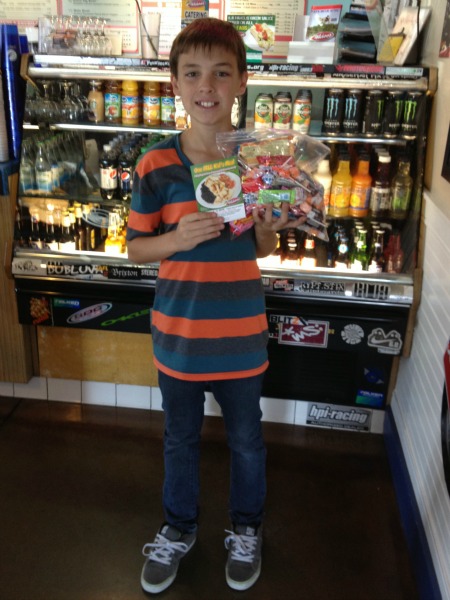
Candy is donated to a charitable organization. I inquired at my local Wahoo’s and they said it was a “children’s charity” but weren’t sure of the exact name. I have sent a tweet to Wahoo’s for clarification and will update this post when I hear back from them.

With all of that said about the good side of Wahoo’s, there are a few areas where Wahoo’s does not rate well on my green scale.

The first is on their to-go packaging. Most locations that I have visited still use styrofoam – boo! If you order in bulk, like for a party, it comes in aluminum trays, but individual to-go orders are in styrofoam containers.

Also, I would like to see Wahoo’s be a bit more transparent in their food sourcing – more like the Chipotle model.

Changing to a more sustainable packaging for to-go items and improving their transparency in ingredients would be two changes that would fit perfectly in with their surf, beach culture, and I think would seriously boost their customer trust and loyalty.

Considering everything, Wahoo’s still lands on the “good” side of Allie’s list. Not a ten, more like a seven or eight, but for a healthy, sit-down meal for a family of four, for just $20, how can you beat it?

And remember to always leave a tip for those nice servers who bring and clear all your food from your table. It makes them happy and you can count it as good karma. 🙂

Wordless Wednesday: Gratitude

There is a hike I do regularly in an OC wilderness park called Whiting Ranch. At the top of the climb, there is a place called four corners. I always stop there and take in the view.

And then I say a little prayer of gratitude, for the day, the weather, the place where I live and most of all, legs strong enough to make the climb and enjoy this view.

Two legs to take me up here (no matter how thin, thick, muscled, wrinkled or tan) is a thing I normally take for granted, but every once in a while, I think it’s important to just stop and appreciate them. And be grateful.

Plastics by the Numbers

I get asked a lot about plastics. I think it’s because many people are confused about the different types of plastics, what is and is not recyclable, and what all those little numbers in triangles mean.

Plastics are a big problem. They are made from a non-renewable source (petroleum), can leach toxins into your food or drink, and some types are virtually unrecyclable.

In my ideal world, we wouldn’t use plastic at all. However, that’s pretty unrealistic so what’s the answer? I think it’s to use plastics more wisely and more sparingly. You can reduce your use of disposable plastic. You can also choose safer plastics, particularly for those items that are likely to come into contact with your mouth –  the most common way the chemicals in plastic enter our bodies.

The first step to choosing safer plastics is to understand what the numbers represent. So turn your plastic container over, check out the number inside the triangle, and read on to see what those numbers mean.

Safer plastics include:

  • #1 PETE or PET (polyethylene terephthalate)  – this plastic is used for most clear beverage bottles, such as water bottles, and two-liter soda bottles. It is one of the most commonly recycled plastics on the planet. The key here is to think about the No. 1 meaning “one-time use”. So don’t reuse single-use plastics. They can break down and release chemicals into your food or beverage when used repeatedly.
  • #2 HDPE (high-density polyethylene) – used to make most milk jugs, shampoo bottles, and laundry detergent bottles. Because No. 2 plastic has been found not to leach, many reusable water bottles are now made from this plastic rather than No. 7 as they were previously.
  • #4 LDPE (low-density polyethylene) – used in most plastic shopping bags, food storage bags, some cling wraps and some squeeze bottles.
  • #5 PP (polypropylene) – used in opaque, hard containers, including some baby bottles, cups and bowls, and reusable storage container (i.e. Tupperware). Drinking straws, yogurt containers, and cottage cheese containers are sometimes made with this. This plastic has a higher temperature limit than the others, so it is sometimes referred to as “food-grade plastic”.

Avoid These Plastics:

  • #3 PVC (polyvinyl chloride) – commonly called “vinyl” is used in commercial plastic wraps and salad dressing bottles, shower curtains, and believe it or not, kids toys, backpacks, lunch bags, and binders. PVC contains phthalate (softeners need to make the plastic bend) and they have been found to interfere with hormonal development. The production of and burning of PVC plastic releases dioxin, a known carcinogen, into the atmosphere. It’s bad for our health and bad for the environment.
  • #6 PS (polystyrene)  – used in Styrofoam cups, meat trays and “clam-shell”-type containers. No. 6 plastics can release potentially toxic materials (including styrene), especially when heated. Yep, that’s right, when heated. So that insulated Styrofoam coffee cup and the “to go” container that you put hot food in, well those don’t seem like such a good idea do they? Also, styrofoam is the largest contributor to ocean plastic pollution and is virtually unrecyclable.
  • #7 Other  – A wide-range of plastic containers are lumped into this category – basically any plastic not rated 1-6. The plastic to be concerned about in this category are the hard polycarbonate plastic bottles which contain bisphenol-A (BPA). No. 7 plastic is used in some reusable water bottles, baby bottles, and some metal can linings. Soft or cloudy colored plastic is not polycarbonate. Avoid polycarbonate, especially for children’s food and drinks. Trace amounts of BPA can migrate from these containers, particularly if used for hot food or liquids.

In addition to understanding the numbers, you can also use plastics more safely by following these tips:

  • Don’t microwave in plastic containers. Heat can break down plastics and release chemical additives into your food and drink. Use ceramic or glass instead. Cover food in the microwave with a paper towel instead of plastic wrap.
  • Use plastic containers for cool liquids only, not hot.
  • Don’t reuse single-use plastics (the number one – PET plastics). They can break down and release plastics chemicals when used repeatedly.
  • Do not use old, scratched plastic containers. Exposures to plastics chemicals may be greater when the surface is worn down.
  • Wash plastics on the top rack of the dishwasher, farther from the heating element, or by hand.
  • When using an electric mixer, use a glass or metal bowl instead of plastic to avoid chipping bits of plastic into your food.
  • Use wooden cutting boards instead of plastic ones.
  • Pick a cotton shower curtain instead of vinyl.
  • Choose glass or BPA-free baby bottles with a clear silicone nipple.
  • Avoid plastic to mouth contact, especially for babies and kids. Give your baby natural teethers like frozen washcloths.
  • Look for toys made of natural materials, like wool, cotton, and uncoated wood.
  • To avoid PVC in school supplies, check out the Center for Health Environment and Justice’s (CHEJBack-to-School Guide to PVC-Free School Supplies, which lists the most common back-to-school supplies made out of toxic PVC and suggests safer PVC-free products in over 20 product categories.

Finally, when rethinking and reducing your plastic, remember to recycle any that you don’t need or don’t feel safe using any more. Keep in mind that No. 1 and No. 2 are almost universally recyclable. Other numbers depend upon your trash service provider.

If you are serviced by Waste Management in Orange County, you can go to this page of their website, select your service area, and bring up a list of the types of plastics they accept for recycling in your curbside bin. In my service area (County of Orange Unincorporated), Waste Management accepts plastics numbered 1-7 for recycling.

To simplify plastics recycling, here is the basic rule of thumb – if the plastic bottle has a neck that’s smaller than the body and has “alor2” symbol on the bottom, nearly every recycling program will accept it.

And due to recent changes in the recycling process, you can now leave your caps on the bottles when you recycle them. Yay, no more removing and trashing the caps prior to recycling!

Allie’s List: The Bagel Shack

This is the first installment of something I am calling “Allie’s List”, where I review local restaurants and businesses in terms of their “greeness”. I will look at things like food sourcing, packaging, waste, etc. I’m not saying it’s totally scientific – just one green girl’s opinion.

For my first post, I want to talk about a place called The Bagel Shack, which has three locations in Orange County – San Clemente, San Juan Capistrano and El Toro.

I stopped by the El Toro location a couple of weeks ago. After dropping my daughter off at practice early Saturday morning, I headed over to Home Depot to pick up some supplies for our weekend projects.

I was STARVING, and craving and egg and cheese bagel, when I looked across the parking lot and saw The Bagel Shack. Woo-hoo, I was so excited.

I was less excited when I walked up and saw a line out the door. But then I figured, hey, the place must be good if this many people are in line.

While I was waiting, I saw someone walk by me with a styrofoam cup. “Well, I’m not getting a drink (I already had my coffee in my reusable mug), so it’s okay.” I said to myself.

Then, another person walked by me with a styrofoam box with a bagel inside. “Well, I’m not getting it to-go so it’s okay.” I justified.

But then, one person after another after another walked by with a box of styrofoam with a bagel inside. Now I realized, THEY PUT EVERY SINGLE INDIVIDUAL BAGEL IN A STYROFOAM BOX – even for those customers who were eating in the restaurant.

By the way, styrofoam (the technical term is Polystyrene) is pretty much the worst packaging on the planet. I could go on and on about how awful it is. Here are just a few of the problems:

  • Once in the marine environment polystyrene kills marine wildlife because it mimics food but causes starvation or choking if ingested.  Polystyrene food packaging contributes disproportionally to oceanic plastic pollution.  Over 80% of this plastic pollution comes from urban litter.*
  • No polystyrene food packaging is recycled anywhere in California, although the plastic industry has attempted to recycle polystyrene transport packaging (at a cost of thousands of dollars per ton).  Most curbside recycling programs in California do not accept any polystyrene plastic resin because it contaminates recycling and is too easily accidentally littered in transportation. *
  • Polystyrene food packaging is extremely costly to local governments, some of whom are required by law to achieve “zero” trash litter in impaired waterways.  Litter clean-up costs billions, and yet is still ineffective. Polystyrene litter must be stopped at its source.*

For me, my complete ban of styrofoam started after my kids and I participated in a beach cleanup where we literally cleaned up tiny pieces of styrofoam from our local beaches for almost an entire day. And we just scratched the surface. The tiny pieces of styrofoam went on and on and on.

Right then and there, we pledged to never, ever, ever…use styrofoam again.

So there I was in line at The Bagel Shack and I was shocked – I could not believe it. I mean, how easy is it to just wrap a bagel up in some paper and send the person on their way? Really, a styrofoam box for EVERY SINGLE BAGEL? Why on earth is that necessary?

So, I did the only thing I could, I turned around and left – hungry and depressed.

And then, I found them on Twitter and sent them a quick tweet to let them know how I felt.

And now, two weeks later, they still have not answered me.

So that friends, is why The Bagel Shack – no matter how good their bagels may taste – is on the “bad” side of Allie’s List.

I wish that they weren’t because the bagels look quite tasty. But to me, nothing served in a styrofoam box, no matter how mouth-watering, is worth eating.

So Bagel Shack, please clean up your act. Start wrapping your bagels in paper (non-toxic, biodegradable, safe for food contact) and get back to me. Because those bagels really did smell so good…

* Information taken from website of Californian’s Against Waste.

Wordless Wednesday: ABC Green Home

The ABC (Affordable, Buildable, Certified) Green Home was unveiled to the press today at the OC Great Park.

I got to preview this one-of-a-kind home and it’s a beauty.

For the full story, check out my post over at OCFamily.com.

Happy Wednesday!

Farmers’ Market Report: Foothill Ranch

Opening in July of this year, the Foothill Ranch Farmers’ Market is one of Orange County’s newest Markets.

Market manager Flo Mudge, a Foothill Ranch resident, is the creator and organizer behind the weekly event. She’s a familiar face at Orange County markets, selling her handmade preserves and confections through her company Edible Creations.

More than twenty vendors regularly set up shop from 3 to 7 p.m. Thursdays in the Towne Centre Drive shopping center in Foothill Ranch (in the same parking lot at the Regal movie theater).

I brought my son along with me, which was a good thing. We filled up all of my Chico bags with good stuff.

There is more than just local, organic produce. There is also bread from RTR Bakery, grass-fed beef from 5 Bar Beef, milk and dairy products from Rockview Farms, hummus and pita bread from Baba Foods, almonds and almond butter from Hopkins Ag, chips and salsa from Chili Boys, gelato from Dolce Gelato, banana bread from Aloha Grindz, and cookies from Turlio Cookie Company (the Peanut Cake were my son’s favorite).

All of the vendors had samples of their products so you can “try before you buy”. We sampled lots of tasty things and came home with all of this:

I cooked up a few of the veggies for dinner and was very happy with the freshness and quality. The Aloha Grindz banana bread is delicious. I can’t wait to munch on the almonds, chips and salsa, and pita and hummus this weekend.

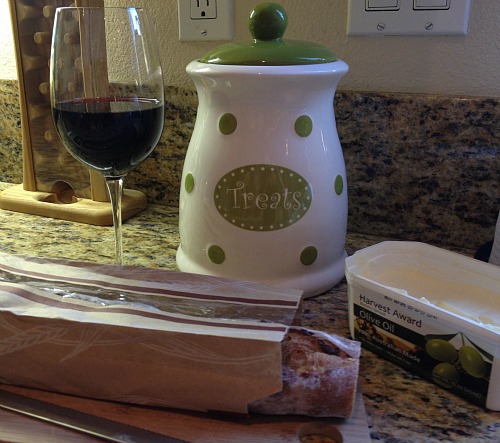
And the nice gentleman at the RTR bakery booth insisted that the bread I bought pairs best with red wine. So, what could I do, I had to oblige him.

I have to say, the man knows his bread.

For more information on this new Orange County market, follow Foothill Ranch Certified Farmers’ Market on their Facebook page. A lineup of vendors for each Thursday is also posted on this page of LakeForestPatch site.

Journey to Solar – Part Two, Financing

Once you make the decision to go solar, the next step is deciding how you want to pay for it.

Solar has come a long way from the days of buying the panels outright.

Today’s solar is flexible and can accommodate many different budgets.

There are basically three ways to go solar:

1. Purchase – this is the oldest and was the most common way to go solar years ago. Basically, you purchase the system, and apply for and receive all your rebates from the Federal and State government directly. Once you have the system installed, it is yours forever, but you are on your own for maintenance and service outside of the warranties. These days, very few customers go with this option.

2. Pre-Pay – This relatively new plan allows you to “pre-pay” your solar energy usage for a set period of time – generally 20 years. You pay a set amount upon installation of your solar panels – essentially, what you would pay for the kilowatt hours (kWh) at today’s rates, and then get all of your solar energy at no additional cost for the next 20 years. In fact, if your solar system does not generate the guaranteed amount of kWh on an annual basis, the solar company will be sending a check to you each year. At the end of the twenty years, you can renew your plan (at discounted rates) or turn the solar panels back in to the company. This plan includes system monitoring, repair service, insurance coverage, and a performance guarantee for the duration of the contract term.

3. Solar lease or Solar PPA – Both of these options essentially boil down to a zero-money-down situation, where you pay a monthly amount to the solar company once your panels are installed and up and running. They offer similar financial advantages to the homeowner. The primary difference is that with a lease you pay a set amount per month, and with a PPA you pay per kWh. One of the benefits of the SolarPPA is that you can purchase the system any time after year five. Availability of SolarPPA and SolarLease vary by location based on what your local utility company prefers. This plan also includes a “buy-out” at the end of the term, or turning panels back in to the solar provider (if they even want them at that point). Both of these plans offer flexible payment options, system monitoring, repair service, insurance coverage, and a performance guarantee for the duration of the contract term.

One thing I like about going with a full-service company like Solar City, is that regardless of which payment option you choose, they take care of every step of the process —including engineering, financing, permits, installation and ongoing monitoring.

In our situation, the Pre-Pay plan was the best deal by far – even better than purchase. With an initial investment of $22,000, it was calculated that we would save $90,000 in energy costs over the twenty-year period. With the payment plan, we could invest nothing initially, pay a set $235 per month for twenty years, and save around $60,000 in energy costs over the lifetime of our contract.

So our decision was whether we finance through the solar company at a set price of $235 per month – effectively paying them $53,000 over twenty years, or find a way to pay them an initial investment of $22,000 (even if we have to borrow money to put that down). For us, the flat fee of $22,000 made more sense. Money is so cheap these days, with interest rates at all-time lows, we just think that the initial payment makes sense financially. If you have access to cheap money through a line of credit, or savings, or even selling some investments, I think it makes sense. I mean, what investment is going to guarantee a return of $90,000 over the next twenty years?

In both scenarios, we would still have a small electric bill depending upon our energy usage. Also, it was projected that we would save a few thousand dollars on our electric bill per year initially, but that amount moved up to almost $9000 per year in year twenty of our agreement. The reason the savings are so high is that unlike electricity, the payment to the solar company is set per month, with no increase, over the course of twenty years.

With energy prices rising approximately 39% over the past decade, and estimated to continue, by locking in your energy costs now, you save a bundle over the next couple of decades.

Even if we decide to sell our house, the solar agreement is transferable, or we can transfer the solar panels to a new home. What’s more, homes that have solar panels are shown to increase in value by 3-4%, which for most people, covers the cost of the system.

But everyone’s situation is different and each buyer has to make the decision that is right for them. The bottom line is that no matter what option you choose, you are going to save money in the long-term by going solar.

For more on solar financing options, you can check out this link.

Wordless Wednesday: Bring on Fall

I was in a Fall kind of mood yesterday, so I got to decorating the house and baking pumpkin bread.

The fact that is was 85 degrees outside did not deter me.

I’m going with the “if you build it they will come” theory on Fall weather. Just looked at the forecast for the rest of the week. It’s not working out so well.

Spotted in OC: 7g Recycling Bins

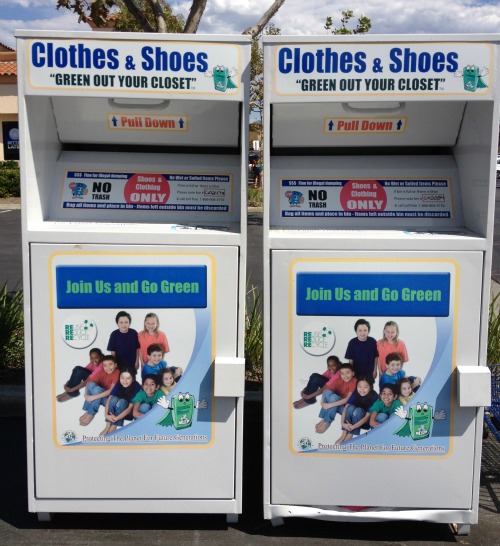
I just saw these today in the parking lot of the Lowe’s in Rancho Santa Margarita.


I had to take some pictures and then go home to investigate further.

Turns out, these are placed there by a company called 7th Generation Recycling. 7G partners with local non-profits, religious organizations, schools, community groups and others to recycle clothing, shoes & household textiles. The company’s collection efforts ensure that the recycled clothing benefits people in our local communities as well as people in Third World Countries.

It is a “green” business, not a non-profit like, say Goodwill or Salvation Army, so keep that in mind if you do donate. But 7th Generation Recycling appears to be a social responsible business that helps promote charitable recycling drives to benefit non-profits and local community programs.

What I do like about these bins is the convenience factor. When I have donations I can just put them in my trunk and the next time I see these out and about, I can toss it in the bin – rather than making a special out-of-the-way trip to a designated donation site.

You can place in the bins any used clothing item and household textile such as pants, dresses, hats, shirts, drapes, curtains, blankets, towels, sheets, handbags, belts, and paired shoes. Stuffed Animals also acceptable. Yay, we have no shortage of those I’d like to see passed on. 😉

Textiles must be dry and in clean condition. Material that is wet or mildewed or contaminated from any liquid is not acceptable. Rubber, plastic toys, carpets, and floor mats are not acceptable.

So, if you have a few bags of clothing, shoes, or accessories taking up space in your home, toss it in your trunk and maybe you will find one of these bins in your local area. Or, swing by this one here in the Santa Margarita Marketplace in RSM.